Speaker, writer, and adviser, Giles Hutchins’ book can be found at www.futurefitbook.com. Giles blogs at www.thenatureofbusiness.org. Mr. Hutchins wrote a posting on Ethical Corporation about the kind of organizations that will have the most impact on markets in the future. His description focuses on the change of decentralization and atomization of organizations in general. The following is my commentary on his article on Ethical Corporation's website. The article appeared in 2016, but the content is still relevant today. Little progress appears to have been made in transforming mainline national and regional organizations. These may be facing higher risks of being supplanted by other competitors with better processes to implement better customer service, product development, and delivery.
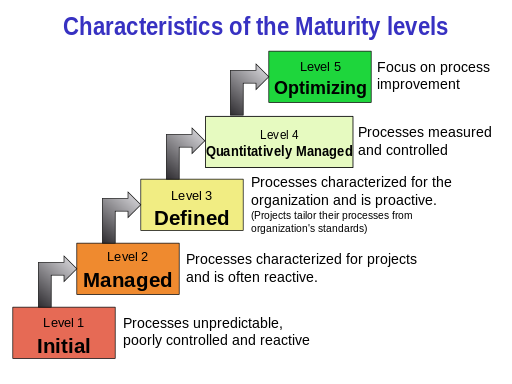 It appears that as any organization matures eventually it will reach a level of maturity that no longer needs the strong organizational character of hierarchical structure and move to a more democratized and horizontal mode that allows for more freedom within the framework that the hierarchical structure provided. Paradoxically, the very structure that hierarchies provide is what these new modalities seek to break down. Now instead of needing all the framework of a traditional organization, these new organizations may act as much as aggregators and organizers without actually creating any physical product. Uber, Facebook, and Alibaba have no inventories, create no content, and own no taxis. Yet, each of them is a leader in a disruptive service that has gained the attention of a significant market segment and because of that has created a new value position that did not exist before, in anyone's mind. Mr. Hutchins describes the comparison of the Past and Future Firm in the following ways:
| Firm of the Past | Firm of the Future | |
| Top-down hierarchy Controlling ethos Remote management by numbers Bureaucratic Short-term maximization for shareholders Competition-orientated Private ownership and control Self-preservation/maximization Exploitation and enslavement Extractive |
| | | | | | | | | | |
Locally-attuned Learning ethos Distributed decision-making Participatory and self-organizing Value-creation for stakeholders Collaboration and co-creativity Open-source open-innovation In service of Life Empathy and empowerment Regenerative |
Creating a neIt's only natural for humans to want to continue what is working as opposed to some new change. But our heritage is changing. Throughout creation, mankind had been on a steady march of change and this latest round of disruption is no different. It is only the steady, omnipresent march of change. The question for every organization is whether will they adapt or be replaced.
Where the current mode may be for a controlling management team it probably will be replaced by a continuously learning and improving self-directed group. Where there was bureaucracy there will probably be a replacement self-organizing group. Where there was a competitive marketplace a new collaborative, co-creative collective may replace it. Extractive activities are replaced by regenerative ones.
Today's organizations find themselves caught in a dilemma of hierarchy vs local control and defensive, self-protecting actions vs. open and innovative expansion. The entropy of protecting the status quo will always be at odds with the inexorable move for change. How we deal with this conflict will determine how successful we are as organizations. Realizing that using change to carry you forward is what sets leading organizations apart from their peers. Their realization that a new paradigm has arrived or that one can exist and perform better than the existing one is the advantage leading organizations exert on their market peers.
Markets are transformed by these leaders acting out new behaviors. Old leaders get supplanted when they no longer hold the attention of a market. Remember to lead you must be able to attract not compel followers. Markets, regardless of what socialism might desire, follow influence. You cannot compel a group to behave in a particular way for long. Eventually, they will follow the desire of the group and not the desire of the supposed leader.
So, what's a modern organization to do? Throw in the towel and caution to the wind. Hardly, the organization our modern civilization desires are more open, democratic, collaborative, and diverse. It is more fluid because it is more diverse. Yet it still seeks the approval of markets and responds to the needs of the markets it can identify and service. It's just that mass marketing is not nearly as important as it has been in times past. Now we can have solutions that are much closer to what we really want. Manufacturing can create low-cost optimized, customized options at cost-effective price points. We all want, what we really want, not what everyone else has, at least some of the time with some things.
Understanding the change from mass marketing to highly targeted audiences means services and products become much more narrowly focused and specialized. You won't sell as many as what might have been sold with mass merchandising, but you will sell enough to make it viable if you tune your message to enough people who are looking for what you can provide. The trick is to find out what is wanted with what you can provide.
The organizations of the future take the waste of today and make something new from it. Stakeholders become partners in new systems of regenerative improvement. Instead of discarding something just because it doesn't fit, now we find value in finding a new owner that can use the slightly used article. Soles4souls.org and Thredup.com both have a solution for just this problem of finding homes for used shoes. One seeks shoes for those in need and the other helps match buyers and sellers through consignments. But both seek to keep shoes out of landfills.
Future organizations will be and do differently than their forebears. They will be more open, collaborative, adaptable, agile, and dynamic. They will abolish silos and become more interdependent. They will become more responsive and organic, living organizations that thrive in an ever-changing market. The stability of the new organization isn't that it is the same today as before, but that it continues to adapt to the change that it encounters.
Go to [Hydra Raises Her Heads, Again]
Part of the Innovation Maturity Model Series